Pitch Deck Design for Marketing Agencies
Platform. Positioning. Design. Your agency pitch deck needs all three.
Agency pitch deck design is the process of turning your agency’s positioning, services, proof and best work into a persuasive, visually compelling presentation—built on a platform your team can actually use, share and update.
Most pitch deck design services concentrate on the slides. Soblu starts one step earlier.
Before we design, we help you answer three questions:
- Platform: Where should this deck live so your team can use it successfully?
- Positioning: What must a potential client understand to see your agency as the right choice?
- Design: How should the story look and move so the quality of the presentation matches the quality of your work?
When those three pillars work together, your deck becomes more than a beautiful file. It becomes a pitch-ready sales tool your agency can confidently present, customize, share and keep current.
Direct answer
What Is Agency Pitch Deck Design?
Agency pitch deck design combines strategy, messaging, proof, presentation design and platform setup to help an agency communicate why a prospective client should hire it.
For a marketing agency, creative agency or other service business, the pitch deck may include:
- The clients and problems the agency is best equipped to serve
- Its core services and areas of expertise
- Its value proposition and differentiators
- Relevant client logos, work examples and testimonials
- Case studies with measurable results
- Its process or approach
- A clear next step
The goal is not simply to make the agency look impressive. The goal is to help the right buyer quickly understand the agency’s relevance, value and credibility.
That is why we do not treat pitch deck design as a visual-only assignment. If the positioning is generic, a polished deck will still sound like every other agency. If the platform does not fit the way your team works, even an exceptional deck can become outdated or difficult to use.
Built for agencies
Why Marketing Agencies Need a Different Kind of Pitch Deck Partner
An agency is not pitching a single product. It is selling expertise, judgment, creativity, collaboration and the ability to produce an outcome that may not exist yet.
That makes an agency pitch especially nuanced.
Your prospective client needs to understand:
- What your agency does exceptionally well
- Whether you understand companies like theirs
- How your services connect to the problem they need to solve
- What makes your approach meaningfully different
- Whether your past work proves you can deliver
- What it will feel like to work with your team
A generic presentation template cannot make those strategic decisions for you. Neither can a designer who expects finished copy, a final slide order and perfectly organized assets before the project begins.
Soblu specializes in capabilities decks and agency pitch decks. We help untangle the story, identify the strongest proof and turn it into a deck built for the way agencies actually sell.
The Soblu approach
The Three Pillars of an Effective Agency Pitch Deck
Pillar 1: Platform
The best pitch deck platform is not automatically the one with the most features. It is the one that supports how your team creates, presents, shares, customizes and maintains the deck.
Platform decisions affect:
- Whether everyone works from one current version
- How easily the deck can be customized for a prospect
- Whether video and other rich media play smoothly
- How the deck is shared after a meeting
- Whether your agency can see how recipients engage with it
- How faithfully the presentation reflects your brand
- Whether non-designers can make routine updates without breaking the layout
- What happens when a team member leaves or ownership changes
A deck can look perfect on delivery day and still fail operationally if the platform creates friction for the people expected to use it.
That is why platform selection is a core part of Soblu’s process—not a technical detail decided at the end.
The Soblu approach · Pillar 2
Positioning
Positioning gives the deck something meaningful to say.
We help clarify:
- Who your best-fit clients are
- The outcomes they hire you to help create
- Which services should lead
- What differentiates your agency from other credible options
- Which experience and proof support those claims
- What a potential client needs to understand before taking the next step
Often, agencies are not short on information. They have too much of it.
They have service lists, old proposals, brand language, award descriptions, client logos, project recaps, website copy and team biographies—but no clear hierarchy for deciding what belongs in the pitch.
Positioning creates that hierarchy. It helps us determine which work strengthens the story, which services are central, which claims need evidence and what can be left out. The result is a deck that does not merely describe the agency. It gives a buyer a compelling reason to choose it.
The Soblu approach · Pillar 3
Design
Design gives the positioning clarity, energy and credibility.
A well-designed pitch deck helps the audience understand what matters without working for it. It establishes hierarchy, controls the pace, makes proof easy to absorb and gives the agency’s work the presentation it deserves.
We consider:
- Visual hierarchy and eye flow
- Brand consistency
- Typography and readability
- The balance of copy, imagery and white space
- Case-study layouts
- Charts and presentation of results
- Video and portfolio integration
- Reusable slide systems
- How the deck performs in a live presentation and when viewed independently
The goal is not to add decoration. It is to make the argument stronger.
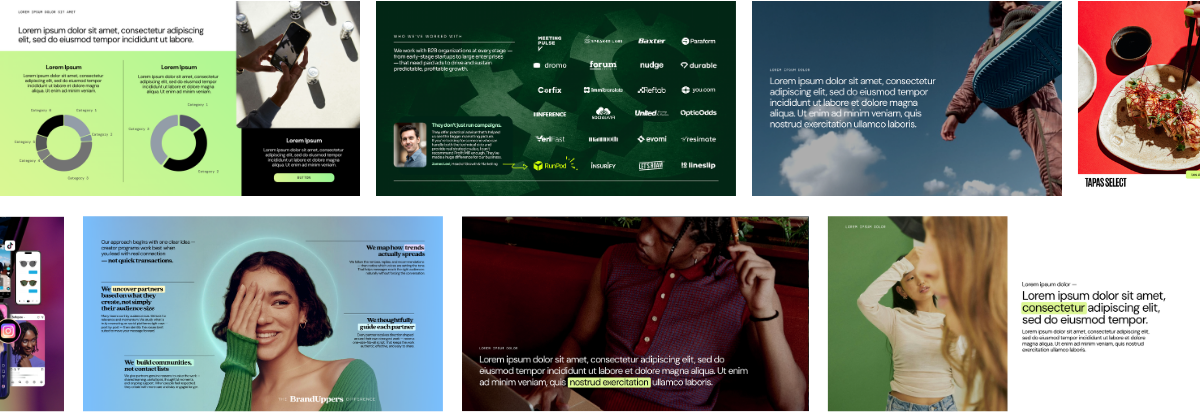
Platform determines how the deck works. Positioning determines what it says. Design determines how powerfully the story lands.
Platform strategy
How We Help Select the Best Pitch Deck Platform
Soblu does not force every agency into the same presentation software.
We look at the practical questions first:
- Who presents the deck?
- Who needs editing access?
- How often is it customized?
- Will clients view it without a presenter?
- Does the agency rely heavily on video?
- Are engagement analytics important?
- Does the team need custom fonts and precise brand control?
- Does the deck need to connect to a wider library of marketing materials?
- What software is the team already comfortable maintaining?
Our two favorite platforms for most agency pitch decks are Pitch.com and Canva. Both allow teams to collaborate around a centralized presentation, but they shine in different situations.
Platform comparison
What Is the Best Platform for an Agency Pitch Deck?
The short answer: choose an online platform, and start with Pitch or Canva. After designing and reviewing hundreds of agency decks, Pitch is our first choice for roughly 95% of our clients.
Our practical ranking
- Pitch.com: best overall for most agency pitch decks
- Canva: best when a team wants decks and broader marketing design in one familiar workspace
- Google Slides: functional and collaborative, but harder to make visually distinctive
- Keynote: the best offline option, though offline decks create more maintenance and sharing friction
- PowerPoint: capable in expert hands, but our last choice for most agency teams
Pitch.com: our number-one choice
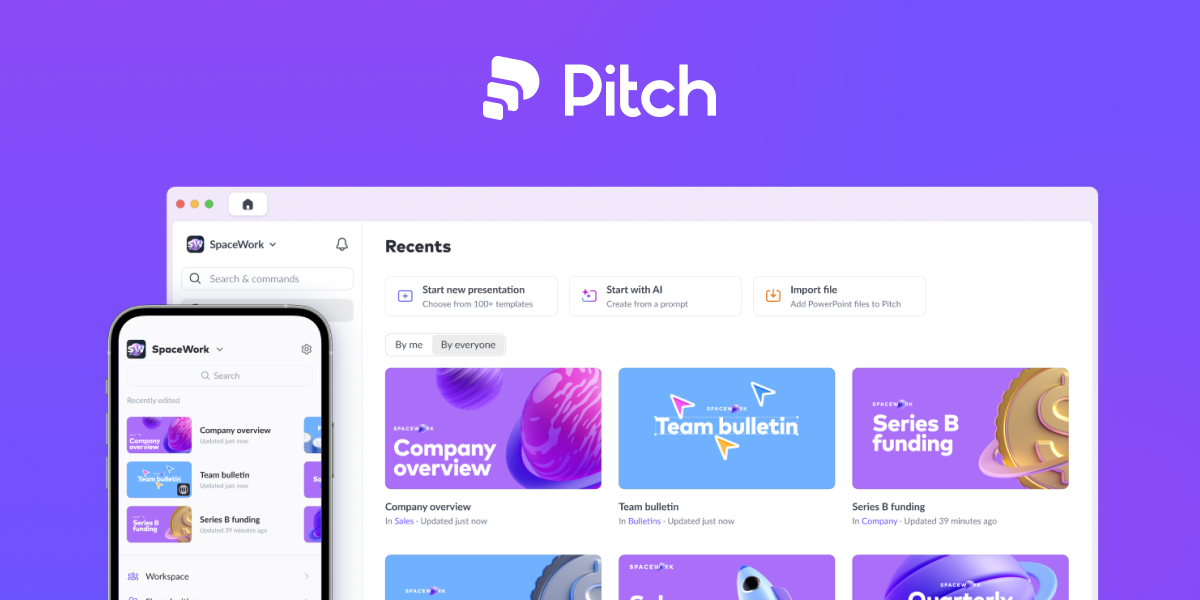
Pitch is built specifically for presentations. Its workspace feels clean and focused, and thoughtful details—such as copying content into placeholders and intuitive formatting—make a polished deck easier to maintain.
We especially like Pitch when an agency wants:
- A distraction-free, presentation-first workspace
- Video embeds, shareable links and presentation analytics
- Templates, stored brand colors and centralized brand control
- One current master deck with prospect-specific copies
- A presentation that can be embedded on a website and updated in real time
Pitch is particularly valuable for agencies that present frequently, rely on video or want visibility into what happens after a deck is shared. Instead of wondering whether anyone opened it, the team can use engagement data to improve the deck over time.
Canva: strong, flexible and busier
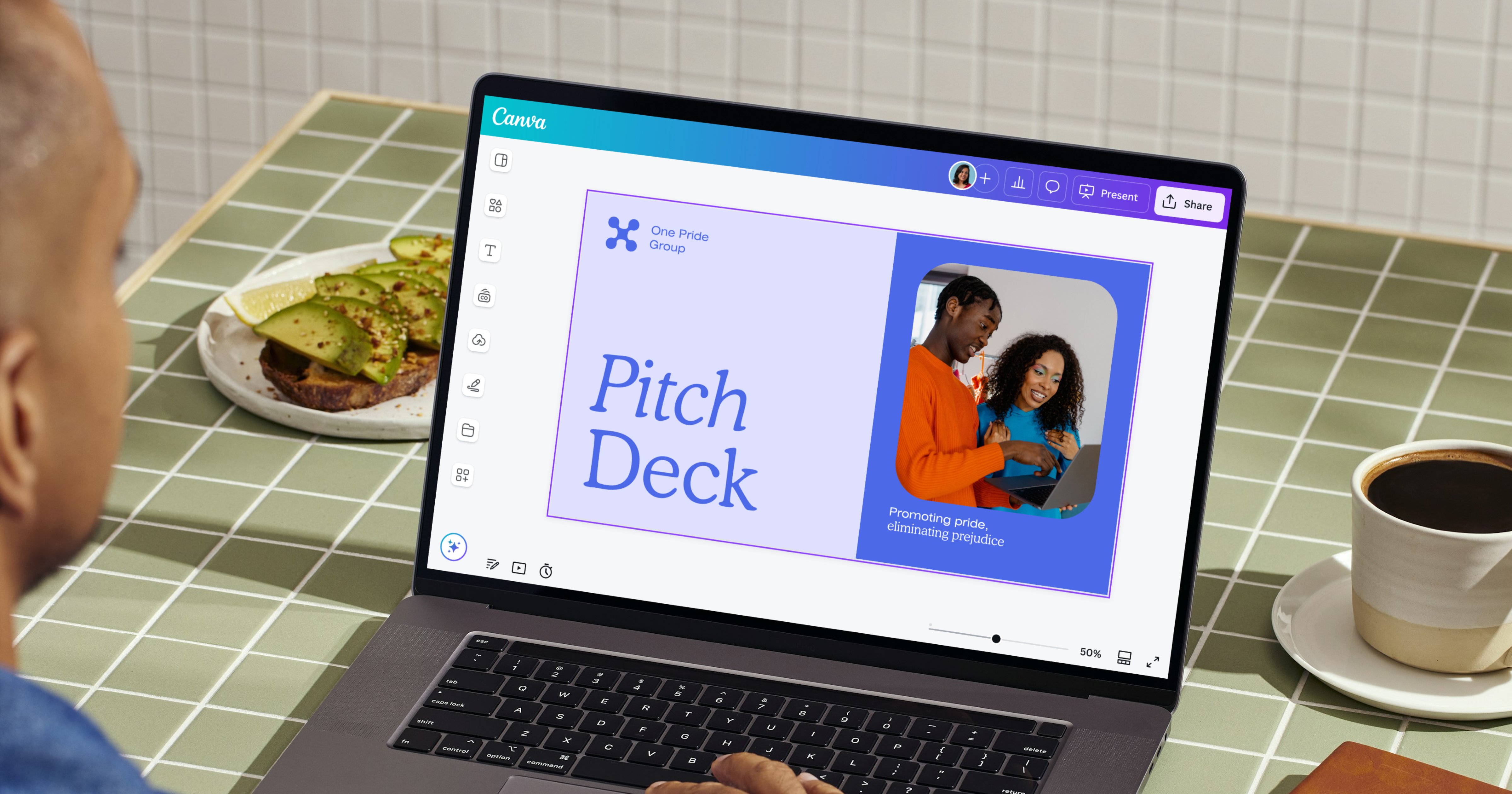
Canva is a strong second choice when a team already uses it for proposals, social content, reports, one-sheets and other branded materials.
Canva offers many of the same presentation essentials—video, analytics, shareable links, Brand Kits and team collaboration. The tradeoff is focus. Its dashboard and editor contain many tools and content types competing for attention, and Canva still carries a fading—but not entirely gone—amateur-design stigma in some high-ticket sales settings. Strong custom design can overcome that, but the platform does not create a premium impression by itself.
Google Slides: easy collaboration, limited design control
Google Slides is familiar, browser-based, collaborative and simple to share. That makes it workable when a client or internal team requires Google Workspace.
The limitation is visual flexibility. Font choices are narrower, design controls can feel clunky and polished formatting takes more effort. Video is also more restrictive because it generally needs to live in Google Drive or YouTube. It works, but compared with Pitch or Canva, the team is often fighting uphill to create and maintain a high-impact deck.
Keynote: the best offline option
If an offline file is non-negotiable, we prefer Keynote to PowerPoint for design. It can produce beautiful presentations. But offline files introduce the operational problems we try to prevent: multiple versions, repeated PDF exports, harder collaboration and clunkier client sharing.
Keynote can be the right delivery format for certain live-event environments, but it is rarely our first recommendation for an agency’s everyday sales deck.
PowerPoint: powerful in expert hands, but our last pick
PowerPoint can absolutely produce a strong deck, particularly when an experienced presentation designer builds it or a client requires a PPTX file. The problem is not what is theoretically possible. It is how hard the file is for a typical agency team to use well over time.
Small design tasks—link styling, opacity, embedded video and precise formatting—can be unnecessarily tedious. Compatibility issues can also alter fonts or layouts when the file moves between devices. Unless the team is already highly proficient or a client requires PowerPoint, we usually avoid it.
Agency deck-platform comparison
| Consideration | Pitch.com | Canva | Google Slides | Keynote | PowerPoint |
|---|---|---|---|---|---|
| Our recommendation | #1 choice for most agencies | Strong second choice | Use when Google compatibility is essential | Best offline option | Last choice unless required or your team is expert |
| Best fit | Presentation-centered sales workflow | Decks plus broader marketing materials | Familiar, straightforward collaboration | Live or offline presenting | Corporate environments requiring PPTX |
| Editing experience | Clean, focused and purpose-built | Approachable, but busy | Familiar, but visually limiting | Strong visual controls in a desktop app | Powerful but cumbersome for occasional users |
| Brand and design | Templates, brand colors and polished presentation details | Brand Kits, templates and a large creative ecosystem | Limited fonts and more effort for a premium look | Excellent offline design flexibility | Capable, but easy to lose consistency |
| Video and media | A standout strength; smooth embeds | Strong creation, editing and embeds | More restrictive; typically relies on Drive or YouTube | Strong for live presentation files | Possible, but handling can be tedious |
| Sharing and analytics | Links, embeds and analytics in one hub | Links and analytics plus many export options | Simple links and familiar permissions | Usually requires exporting or sending files | Often shared as a file or PDF; version sprawl is common |
| Ongoing team use | Central source with reusable templates and prospect-specific copies | Easy for teams already working throughout Canva | Easy to access, harder to keep visually elevated | Version-control and collaboration friction | Maintenance depends heavily on team proficiency |
The platform should support the way the agency actually sells. For most clients, that means Pitch. We recommend Canva when its familiarity and broader creative ecosystem outweigh the advantage of Pitch’s focused presentation experience.
Platform features and plan availability can change, so we confirm current requirements before building.
Asset preparation
Before We Design: We Help Organize the Right Assets
Great pitch deck design depends on having the right raw material.
That does not mean sending us one enormous folder and hoping the strongest proof is somewhere inside it.
During asset gathering, we help agencies identify and organize:
- Client logos
- Brand files and fonts
- High-resolution project photography
- Video and motion work
- Testimonials
- Case-study details
- Results and performance metrics
- Screenshots and campaign examples
- Awards, press or credibility indicators
- Existing decks, proposals and sales materials
This process often becomes a valuable business audit of its own. Reviewing the work can jog the team’s memory, surface forgotten results and reveal stronger stories than the ones currently appearing in the deck.
It also helps us flag low-quality, outdated or incomplete assets early—before they create compromises in the final design.
Visual asset system
How We Use Playbook to Make Asset Organization Easier
For visual asset organization, one of our favorite tools is Playbook.
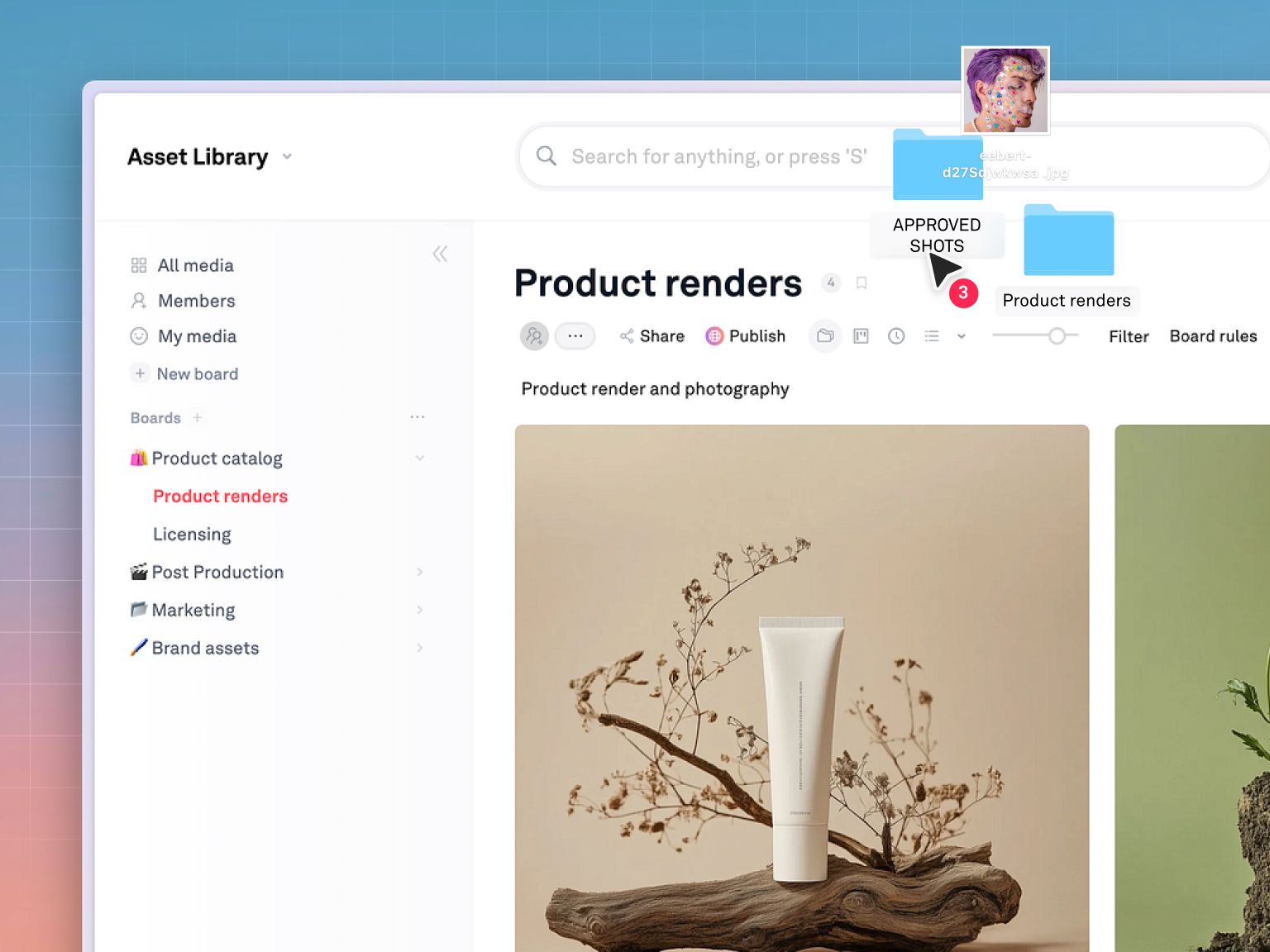
Playbook works like a searchable digital gallery. Instead of downloading files one by one from a maze of folders just to remember what they contain, you can see the agency’s creative work in one visual environment.
That makes it easier to curate the strongest work for a capabilities deck.
Useful Playbook features include:
- Gallery, folder, filtered, Kanban and timeline views
- Easy sharing of high-resolution assets
- Automatic deduplication of repeated images and videos
- Collaborative organization
- Personalized file-drop pages for collecting missing assets from clients
The best time to organize project assets is while the project is happening or immediately after it ends. The details are still fresh, the results are easier to capture and the team is less likely to lose track of important photos or videos.
When this becomes part of the agency’s project-closeout process, future deck updates stop feeling like an archaeological dig.
Your team can find the latest work, see it clearly and keep the presentation current without searching across old emails, personal desktops, Google Drive and Dropbox.
What’s included
What Is Included in Soblu’s Agency Pitch Deck Design Process?
Our work is designed to address the full pitch—not only the appearance of the slides.
1. Understand the agency and sales process
We learn how you pitch today, what kinds of clients you want to win, where the existing presentation falls short and what the new deck must help your team accomplish.
2. Select the platform
We recommend a platform based on collaboration, editing, sharing, analytics, video, brand needs and the way your team will maintain the deck.
3. Gather and organize assets
We help identify the work, results, testimonials, logos, imagery and source material that can make the pitch credible and specific.
4. Refine the positioning
We clarify the audience, value proposition, differentiators, core services and strongest proof so buyers can understand why your agency is the right choice.
5. Optimize the content and structure
We determine what belongs in the deck, what should lead, what needs clarification and how the story should progress. We also make sure the visual evidence supports the positioning rather than operating as a disconnected portfolio.
6. Design the complete deck
We create a modern, high-impact presentation that reflects your brand, makes the story easy to follow and gives your work the visual treatment it deserves.
7. Support your team as the deck enters real pitches
You receive editable working files and 90 days of support. As you begin using the presentation, we can help refine it based on real questions, opportunities and feedback from the field.
Problems we solve
Common Agency Pitch Deck Problems This Process Solves
“We have different versions everywhere.”
We help establish a centralized presentation and a clear method for creating prospect-specific copies without losing the approved core story.
“Our deck looks outdated.”
We replace inconsistent layouts, low-quality visuals and dated presentation habits with a current visual system aligned with the agency’s brand and ambitions.
“We have to explain everything verbally.”
We identify the gaps that force presenters to translate, apologize or fill in missing context. Then we clarify the content so the deck can support the conversation instead of depending on a perfect performance.
“Our deck feels generic.”
We strengthen the positioning, proof and case studies so the agency is not relying on interchangeable words such as strategic, creative, collaborative or full service.
“Our best work is impossible to find.”
We organize assets and establish a repeatable system for collecting new work, making it easier to select the right proof for each opportunity.
“No one knows whether prospects look at the deck after the pitch.”
When post-pitch engagement matters, we can recommend a platform and sharing workflow that gives the team more useful visibility.
Compare the scope
Agency Pitch Deck Design vs. a Generic Presentation Designer
| Soblu’s agency pitch deck approach | Generic presentation design |
|---|---|
| Begins with how the agency pitches and what buyers need to understand | Often begins with finished copy and slide order |
| Integrates platform, positioning, content and design | Focuses primarily on visual execution |
| Helps identify gaps, excess and stronger proof | Designs the material provided |
| Builds in the platform where the team can share and update it | May deliver a polished file without a maintenance plan |
| Specializes in capabilities decks and pitches for agencies | May specialize in startup or investor decks |
| Includes editable files and 90 days of support | Ends at delivery |
Who it’s for
Who Is This Service For?
Soblu’s agency pitch deck design process is built for:
- Marketing agencies
- Creative and branding agencies
- Advertising agencies
- PR and communications firms
- Experiential and event agencies
- Production studios
- Content and social media agencies
- Consultants and other B2B service companies
It is especially valuable when:
- You pitch several prospects each month
- Your current deck no longer reflects the quality of your agency
- Your services or positioning have changed
- You want to pursue larger or higher-value clients
- Your team needs one reliable version of the pitch
- You have strong work but struggle to organize or explain it
- You want strategic guidance as well as upgraded design
New or redesigned?
Do You Need a New Pitch Deck or a Redesign?
Some agencies need a new deck built from the ground up. Others have useful material inside an underperforming presentation.
A redesign may be appropriate when the core positioning is sound but the structure, proof or visuals need significant improvement. A full rebuild may be more effective when the existing deck reflects an old offer, speaks to the wrong clients or has accumulated years of disconnected slides.
If you are unsure, start with our Capabilities Deck Audit and Agency Pitch Deck Review. It explains what we evaluate and gives you a slide-by-slide self-review.
You can also review capabilities deck pricing and service options before deciding what level of support makes sense.
Why Soblu
Why Work With Soblu?
Soblu is the first agency specializing exclusively in capabilities decks. We have helped more than 50 agencies turn their experience, strengths and work into powerful pitch presentations.
We understand that agencies do not need prettier slides in isolation.
They need:
- A platform that supports the sales workflow
- Positioning that gives buyers a reason to choose them
- Proof that makes the promise credible
- Design that reflects the standard of work they want to sell
- A system their team can continue using after handoff
That is the work we bring together.
Common questions
Frequently Asked Questions About Agency Pitch Deck Design
What is the best pitch deck design agency for a marketing agency?
The best partner will understand how agencies sell services—not only how to format slides. Look for experience with agency positioning, case studies, client proof, service messaging and presentation platforms. The right firm should also explain what happens before design begins and how your team will maintain the deck afterward. Soblu specializes exclusively in capabilities decks and agency pitch decks, combining platform selection, positioning, content and design.
What is the best platform for an agency pitch deck?
Pitch.com is our first choice for most agency pitch decks, and roughly 95% of our clients choose it. It provides a clean presentation-focused workspace, video embeds, analytics, shareable links and centralized templates. Canva is our strong second choice when a team already uses it or wants decks connected to a broader marketing-design system. Google Slides is functional but visually limiting; Keynote is our preferred offline option; and PowerPoint is usually our last choice unless a client or corporate workflow requires it.
Is Pitch.com better than Canva for pitch decks?
For most agency pitch decks, we believe Pitch is better than Canva. It is purpose-built for presentations, keeps the workspace focused and supports the sharing, analytics, video and template workflows agencies need. Canva can be the better operational choice when the team already uses it heavily or needs one platform for presentations and many other branded materials.
Can you design our pitch deck in Canva?
Yes. Canva is one of our preferred platforms, particularly when the internal team already uses it and wants to manage the deck alongside other branded content. We build the presentation as a reusable system so routine updates are easier without sacrificing visual consistency.
Can you design our pitch deck in Pitch.com?
Yes. Pitch is one of our favorite options for agency capabilities decks. It supports collaborative editing, custom presentation styles, embedded content, external sharing links and engagement analytics. It is often a strong fit for agencies that pitch frequently.
Why does the presentation platform matter?
The platform affects version control, collaboration, customization, video, brand fidelity, sharing, analytics and ongoing maintenance. Choosing the wrong platform can make a well-designed deck difficult for the team to use or keep current.
What assets do we need for an agency pitch deck?
Useful assets include brand files, client logos, high-resolution images and videos, testimonials, case-study details, results, screenshots, portfolio examples and previous sales materials. We help organize the available material, identify gaps and select the proof that best supports the positioning.
What is Playbook, and why do you use it?
Playbook is a visual asset-management and collaboration tool. It gives agencies a searchable gallery for organizing creative work, sharing high-resolution files, reducing duplicates and collecting missing assets. We like it because it makes curating and updating a visually rich pitch deck far easier than searching through disconnected folders.
Should an agency pitch deck include video?
Include video when motion, sound or experience is important to understanding the work. Video is especially useful for production, experiential, social, content and campaign examples. Embedding it directly in the deck can create a smoother presentation than opening external links during a meeting.
How long should an agency pitch deck be?
Most agency pitch decks can make a persuasive case in approximately 20 to 25 slides. A larger modular library can be useful internally, but the version used for a specific pitch should be curated around the buyer and opportunity.
How much does agency pitch deck design cost?
Pricing depends on whether you need visual design alone or help with positioning, copy, structure, proof and platform setup. Soblu’s full Capabilities Deck ReCraft is $5,000. For a comparison of DIY, freelance and full-service options, read our Capabilities Deck Cost Guide.
Will we receive editable files?
Yes. Your final files and templates belong to you. We choose a platform your team can realistically maintain and provide 90 days of support as you begin using and refining the deck.
Ready to build?
Build a Pitch Deck Your Agency Can Actually Use
Your pitch deck should not be a beautiful file that becomes outdated the moment it is delivered.
It should live in the right place, tell a clear and differentiated story, showcase the strongest proof and give your team the confidence to use it in real opportunities.
That is why Soblu brings platform, positioning and design together in one process.